
Display
Display Graded Cards: Safe Setup for Your Slabs
In the secondary market, buyers usually inspect the holder before they look at the card inside. A scuff or a hazy label can weaken the price discussion before anyone talks about cardboard wear. Display is therefore the same job as protection, with the collection still visible.
9 min · Updated 2026-08-30
On This Page
Display and protection are the same job
A slab seals the card, it does not stop scratches, fingerprints, UV, or dust on the holder itself. Sloppy display still hurts resale when buyers see haze, scuffs, or a tired label.
The goal: PSA or CGC label and card face visible at a glance, inner holder shielded from scratches, bag pressure, and cumulative fade. Display is not vault storage. You need shelf-stable, photo-ready setup without adding wear.
Start cheap for bulk. Spend up on the cards that carry the collection.
Starter display: binder, stand, magnetic case
Best for beginners and small-to-mid collections, low cost, easy to learn.
Slab sleeve + binder: slide each slab into a clear sleeve, then into a 3- or 4-ring binder page. Easy to flip, carry, and dust-proof. Pick binders with soft inner liners so slabs do not grind each other.
Single-card stand: acrylic or plastic slab stands for desk or cabinet, upright or flat for a chase PSA 10 rookie or key TCG copy.
Magnetic rigid case: fit the slab in a magnetic graded slab protector, 35PT PSA/CGC fit, N52 closure, >95% UV front panel. Corner protection beats soft sleeves alone with desk or shelf presentation. No screws through the inner holder.
Advanced and Large-Collection Display
Display cases and cabinets: multi-slab display cases add dust and UV cover; wood or glass cabinets suit living rooms and hobby rooms with low-color-temperature, UV-free LED.
Drawer cabinets scale for large sorted sets.
Wall display: floating frames or slab wall ledges for vertical hero cards. Stay off sun-hit windows; use UV-filtering glass or acrylic. Anchor for 74–150 g per unit, adhesive strips fail after a humid Hong Kong summer.
Card shows: portable case, layered packing, spare sleeves; insure high-value copies. Display the same slab in the same outer case end to end so photos and inventory stay aligned.
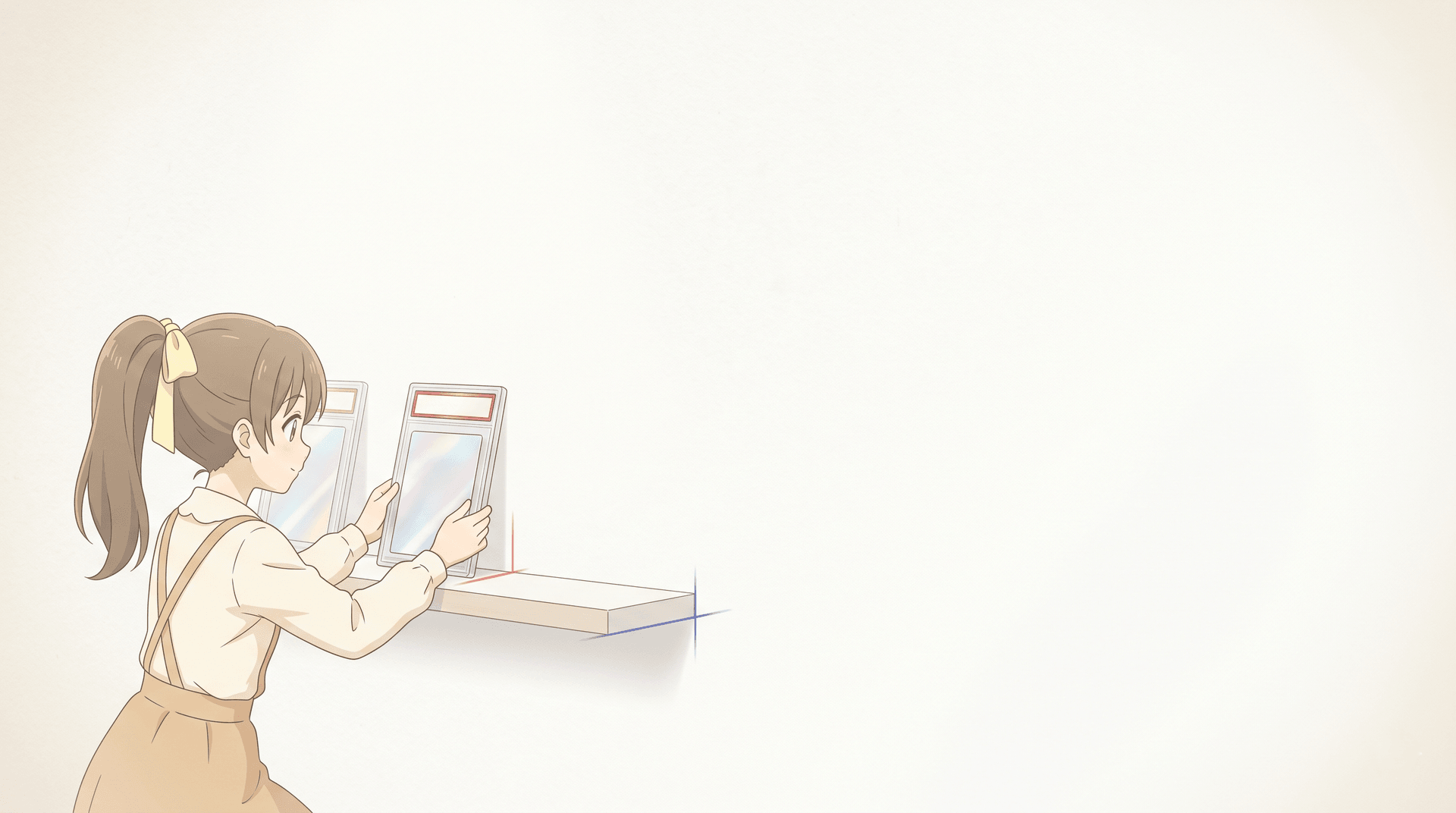
Shelf rows: stand slabs vertical with at least 5 mm between outer cases. Never stack bare slabs ten deep flat, weight and vibration stress inner case seams.
Protection While on Display
Environment: cool, dry, stable humidity, no heat spikes or window sun. In Hong Kong apartments, pair with desiccant; see our UV storage guide.
UV: pick sleeves, rigid cases, or display boxes that block >95% of UV below 400 nm. Window sun still adds UVA behind glass season after season.
Maintenance: minimize bare-hand contact, grip sleeve or outer case edges; wipe with a lightly damp soft cloth, not paper towels on plastic; light holder wear → PSA reholder.
Stacking: avoid long vertical crush loads or flat bare-slab stacks. Rotate slabs under booth LEDs at shows, outer cases slow UV, they do not remove heat.
Display Methods at a Glance
Match setup tier to collection size and card value. Common configs below.
| Display use | Recommended gear | Collection size | Protection level |
|---|---|---|---|
| Daily storage | Slab sleeve + binder | Small to mid | High |
| Spotlight single | Magnetic case / stand | Any size | Very high |
| Bulk display | Cabinet / display case | Large | High |
| Wall feature | Floating frame + UV panel | Key cards | Medium-high |
Practical Tips
Tier by value: chase PSA 10s and scarce keys deserve a magnetic graded slab protector or equivalent top-tier outer case; bulk modern copies live in binders.
Balance look and logic: sort by set, player, or year. On a desk, angle the front panel away from monitor glare, holo depth reads better in photos.
Start simple: binder + sleeves first, upgrade spotlight cards to a magnetic case or cabinet. Confirm 35PT PSA/CGC fit before you buy, see 35PT case fit guide.
Hong Kong homes: one premium case on an interior wall beats an afternoon-sun window ledge. Bring a slab when you shop locally to verify label and face clearance.
If the cert reads clean, you did it right
Display should add joy without new holder damage. If the cert still reads clean and the case has no fresh scuffs, the setup is working.
Common Questions
Frequently Asked Questions
01What is the best way to display graded cards at home?
02Can I stack PSA slabs flat on a shelf?
03Does window light fade slabs even inside a case?
Display-ready slab protection
The magnetic case uses glass that blocks more than 95% of ultraviolet below 400 nm, and is sized for standard 35PT PSA and CGC holders on a desk or shelf. If the slab is already in hand, fit the outer case before display. Hong Kong collectors who still hold raw cards book online, then complete intake face to face at 138 Arena. 138 Arena handles the floor and collects payment. Appaw Store runs PSA grading submission and follow-up, and may adjust the final amount.